
Reforming Songbird Trapping Permits in Iran
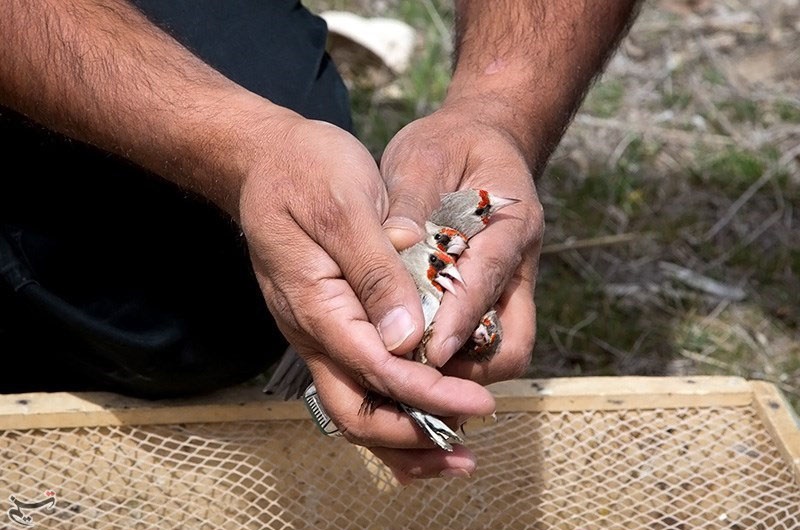
Songbirds in Iran have long been affected by live capture, transport, keeping, and sale. While permit systems are often designed to regulate wildlife use, they can also create enforcement challenges when monitoring and verification mechanisms are weak.
This policy brief examines Iran’s songbird trapping permit system as a governance and compliance-verification challenge. It explains how valid permits could function as documentary cover for possession, transport, transfer, or sale of wild-caught songbirds, making it difficult for enforcement authorities to distinguish compliant activity from illegal trade pathways.
Background
Iran has a long-standing legal framework for regulating hunting, trapping, possession, transport, and trade of huntable wildlife. Publicly accessible evidence shows that province-level live-capture permits for songbirds were active from at least the early 2010s and were nationally reported by 2016.
The issue is not limited to trapping in the field. Once birds enter cages, vehicles, markets, private residences, or transfer pathways, enforcement officers must verify whether they were captured legally and within permit conditions. In practice, this creates a compliance-verification problem.
The permit system was intended to regulate limited live capture under administrative conditions. However, field evidence, enforcement accounts, media reports, and stakeholder engagement indicate that it created significant practical challenges.
The core problem was not only illegal trapping. It was also the difficulty of verifying compliance within a legal permit system.
This created a policy paradox: some licensed actors reportedly helped identify unlicensed trappers, while the same permit framework could complicate enforcement by allowing offenders to present formal documentation.
AvayeBoom’s Role and Policy Outcome
AvayeBoom Bird Conservation Society consolidated field observations, enforcement concerns, media evidence, and stakeholder feedback in early 2026. Based on this evidence, AvayeBoom submitted a formal policy request to Iran’s Department of Environment, calling for a structural reassessment of the permit system and a temporary suspension of permit issuance.
The policy process described in the brief is supported by official Persian-language correspondence, including AvayeBoom’s formal request, the Wildlife Office response, and the subsequent directive to provincial offices. Copies of these documents are held by AvayeBoom Bird Conservation Society and can be made available upon request where appropriate.
Following internal review and consultation, the Department of Environment suspended the issuance of songbird trapping permits for a defined period of five years.
This time-bound suspension creates an opportunity to monitor ecological and enforcement outcomes before a permanent decision is made. Depending on the results, the policy may be extended, allowed to expire, transformed into a permanent ban, or replaced with a reformed permit system supported by strict monitoring and compliance mechanisms.
This case illustrates a broader governance challenge in wildlife conservation: legal regulatory systems, when weakly monitored and difficult to verify in practice, may unintentionally create opportunities for abuse.
The brief argues that the five-year suspension should be treated as an adaptive policy intervention, linked to systematic monitoring, evaluation of unintended consequences, inter-provincial coordination, and a clear long-term decision pathway.
Key Messages
The policy brief highlights four main messages:
- The core problem was not only illegal trapping, but the difficulty of verifying compliance within a legal permit system.
- Valid permits could function as documentary cover for possession, transport, transfer, or sale of wild-caught songbirds.
- Repeated enforcement cases across multiple provinces indicate a recurring governance and enforcement problem, not an isolated local issue.
- The five-year suspension should be treated as an adaptive policy intervention requiring systematic monitoring, evaluation, and a clear decision pathway.


Leave a Reply
Want to join the discussion?Feel free to contribute!